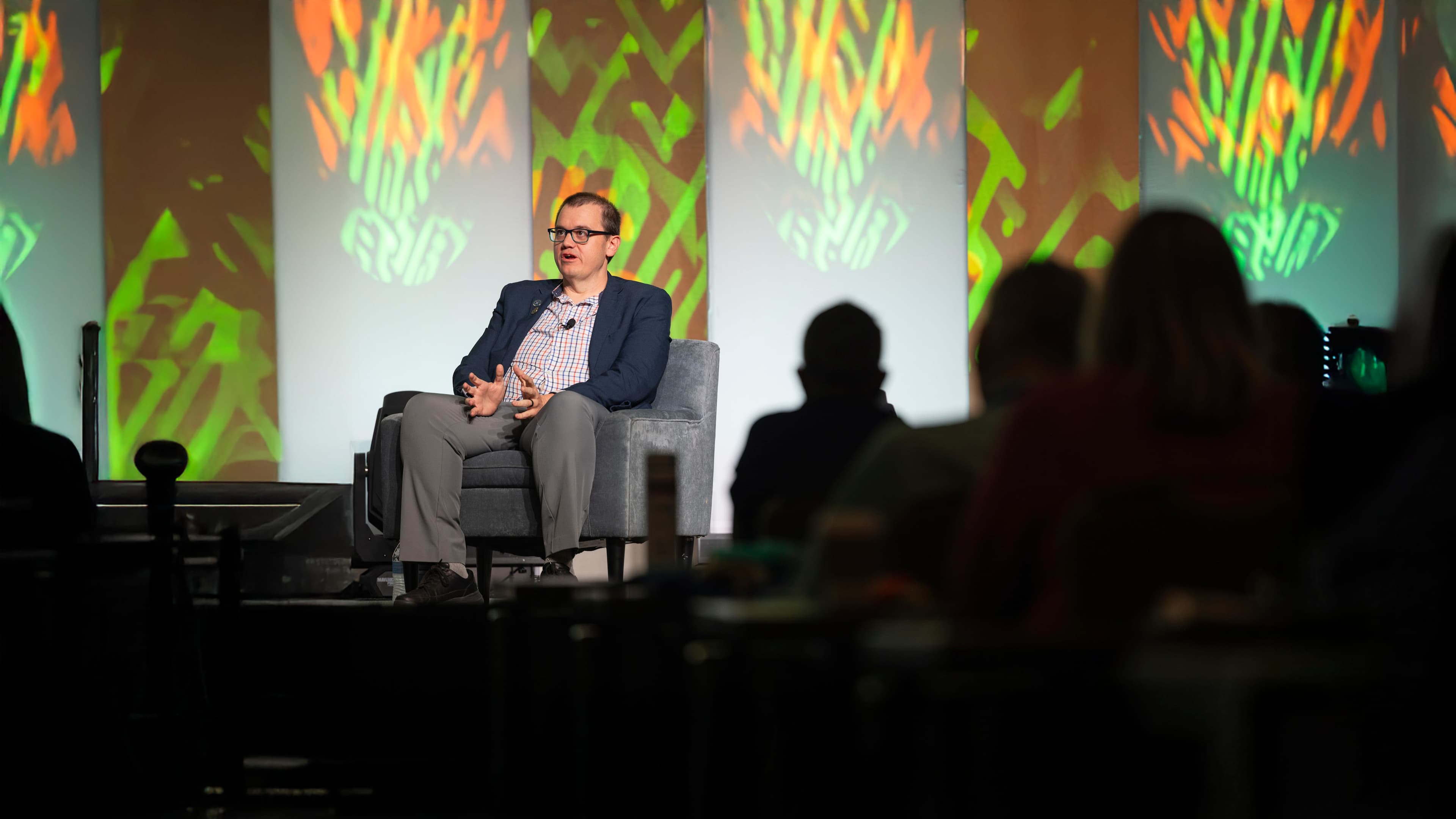
Richard Gibbens: A Heart for Service
By MLSPropTech.com | February 22, 2025
Bluegrass REALTORS® was founded in 1912 and represents over 4,000 members across 38 counties in Central and Southern Kentucky, making it the second largest local association in the state. As one of the more innovative associations in the country, they have demonstrated a commitment to technological advancements and implementing strategic initiatives to enhance member services and market efficiency. Imagine MLS, operating under Bluegrass REALTORS®, serves as the MLS platform for the region. In 2024, Bluegrass REALTORS® appointed Richard Gibbens as CEO of both the association and Imagine MLS, bringing his extensive experience to the organization.
Before joining Bluegrass REALTORS®, Gibbens served as the Executive Director of Southwest MLS (SWMLS), a subsidiary of the Greater Albuquerque Association of REALTORS® (GAAR) in New Mexico. In this role, he spearheaded multiple industry-first initiatives and embraced innovative technologies. Now, as CEO, he continues to bring innovation and forward-thinking strategies to enhance member success and maintain the organization's prominence on the national stage. In this feature, Gibbens opens up about his background in different industries and the valuable lessons learned on the journey to his current position. From working at restaurants and retail to leading a national organization, Gibbens shares how these experiences helped him maintain the focus on fostering a people-first culture and adopting a down-to-earth leadership style to better serve his team and consumers alike.
From Call Centers to C-Suite
How did you get involved with the MLS-PropTech industry?
This is a funny story. After earning my MBA, I submitted more than two hundred applications trying to get out of the call center world. All of them were the things you were “supposed” to do—tailor the resume to the job posting, write a cover letter, call or drop in to introduce yourself, etc. No luck. One day I was on an app that was like a Tinder for jobs—swipe right to accept, swipe left to pass. I saw a position called MLS and IT Support. It sounded interesting, so I swiped right, thinking it was going to send me a link to apply. But no, it sent my resume on file directly to the CEO, which was out of date, full of typos, and easily the worst resume I’d ever submitted. And that’s who called me back. Go figure.
I didn’t know it at the time, but my skills lined up perfectly with the industry in ways I couldn’t have imagined. About a year and a half later, I attended my first industry conference, and I was immediately hooked. I knew then that this was where I wanted to make my career.
How have your previous experiences shaped your approach as CEO?
I believe you learn a little bit from every experience, and I’ve worked in all the worst sectors. Working in restaurants taught me to multi-task, move quickly, and serve the public. Working in retail taught me the importance of teamwork, punctuality, and cross-training—along with a lot of what not to do in management.
Working in call centers gave me thick skin and taught me how to handle objections, deliver news a customer doesn’t want to hear, and provide alternative solutions to problems that couldn’t be addressed directly. Call centers also showed me how efficient processes and technology can significantly improve the level of service employees provide, regardless of their skill level.
What personal skills have been most instrumental in your career progression?
My greatest strength is simplifying complex concepts and making them easy to understand. This skill is particularly valuable when staff dedicate 20-40 hours to researching a topic that needs to be distilled into a 15-minute presentation for a Committee or Board of Directors to make informed decisions.
Additionally, my background in English has made me a versatile communicator, capable of tailoring my style to suit the preferences of any audience. Together, these abilities allow me to guide others effectively through change and challenging situations.
I also have a strong understanding of both the potential and limitations of development, allowing me to bridge the gap between developers and volunteer leaders. This unique perspective helps me discover solutions that neither side might have identified on their own.
What do you consider your biggest professional achievement?
I am immensely proud of earning the CMLX3 designation, but my favorite single achievement is winning the first annual Bev Reed Award from FBS. This award recognizes individuals who exemplify MLS leadership and partnership with FBS through their actions, communication, and participation in improving the Flexmls Platform, the MLS, and its subscribers. I really pride myself in building strong relationships with my vendor partners in a way that we are not just a vendor/customer, but that we are truly co-creators of the future of the industry. I’m incredibly proud of the relationships I’ve built with the team at FBS and the many projects, features, and collaborations that have come from those partnerships. Getting this award is just a testament to that.
It also helps that Bev Reed was the very first person to introduce herself to me at my very first real estate conference, and frankly she deserves the credit for pulling me out of my shell in those early days.
Shaping the Future
Can you discuss a recent project or innovation that you are particularly proud of?
The FBS and Rental Beast integration with webhooks is something I am very proud of, and I hope is just the first step to a major shift in how this industry transfers data. Through this integration, we demonstrated in a real-world production environment that true real-time data exchange is not only possible but achievable at speeds that we did not anticipate.
Webhooks can solve a lot of the legacy problems that the industry has accepted as normal. They also reduce server load and costs for vendors by eliminating the need for servers to constantly check for updates at regular intervals. We are slowly killing off the RETS dinosaur and moving to APIs, which is great, but we should start looking at what is next and get there a little faster this time.
What is the most exciting opportunity you see for MLSs in the next decade?
I’m most excited for the competition. Do you have any idea how many features in modern cars originated in the racing world? Crumple zones, turbocharging, fuel injection, multi-function steering wheels, active suspensions, carbon fiber, rear view mirrors, disc brakes, all-wheel drive—all of these things, and hundreds more, were developed in the highly competitive world of car racing before being adapted to consumer cars.
I’ve often said that the legal and regulatory challenges we are facing right now could be the single best thing that has ever happened to this industry. This is what’s going to create incredible levels of competition and innovation. Don’t get me wrong—there’s still immense value in cooperation between MLSs and vendors to facilitate the world’s most efficient marketplace, but there are board rooms and developer meetings happening all over the country, all focused on coming up with the next big thing.
In your opinion, what is the most underrated tool in real estate right now?
People who know me only by reputation might expect me to highlight some big, shiny object here or point to the obvious choice of Artificial Intelligence. But no, it’s far more foundational than that. The most underrated tool in real estate right now is Compliance.
It’s something that has become so commonplace and blasé that we often forget the importance of it. There are plenty of tools out there that help organize compliance, or even automate it at some level, but the most underrated “technology” is the MLS Compliance Specialist, sitting at a desk reviewing individual error reports and deciphering the many gray areas that exist between the real-world practice of selling a house and the black-and-white nature of the Rules and Regulations.
Compliance is our differentiator, and what separates us from everyone else. People often forget that every major portal has, at some point, attempted direct listing entry. Every time, they return to MLS data because we provide local nuance, expertise, and enforcement at a level no other entity can match.
Leadership and Management
How do you approach decision-making and strategy as the leader?
Start with a strategic plan, a clear vision, and an agreed-upon direction that everyone in the organization buys into. Focus on what you’re good at and outsource what you’re not. Make sure you understand your strengths and weaknesses, and how to effectively use both to your advantage. Move fast, break stuff, iterate and improve. Don’t let perfection be the enemy of progress. If your answer about why you do something includes any variation of “that’s how we’ve always done it,” it’s time to either find a better reason or create a better way. At the same time, never tear down a wall until you know why it was built. When all these tenets are deeply ingrained into who you are and what you do as an organization, culture will naturally shape decision-making and strategy in ways that will surprise you.
What is your leadership style, and how has it evolved?
Servant leadership is at the core of everything I do. Whether I’m serving members, the board, staff, or the industry, my role is to provide the tools, knowledge, and support needed for those I lead to make empowered decisions in their day-to-day and grow through their own experiences.
My heart of service has never changed, but the method of how I deliver service has evolved over time. In my call center days, it meant developing tools and spreadsheets to help my team perform better. At Central Panhandle AOR, it involved updating processes and documentation to make the organization more efficient and consistent. At Southwest MLS, it took the form of creating videos and training materials to empower better decision-making, while also leading projects and learning the art of effective delegation.
Now, it looks like setting the culture and vision, ensuring everyone is equipped with the tools and training needed to execute at a high level. I empower my team to make decisions, give them room to learn from failure, and make sure that I am there to support and coach them through any issues that arise.
How do you approach adapting to changes and disruptions in the business landscape?
How you react to change is a direct representation of your training and preparation. Change is inevitable—the real question is whether you’ll wait for it to happen and be forced to react or build a culture that embraces change, giving you more control over how and when it occurs.
I believe in creating a culture where change and forward-thinking are part of daily conversations. Subscribers, members, and staff in organizations I’ve worked for will tell you change was something they came to expect. They trusted they’d be well informed, they’d have the opportunity to be involved in the change process, and that their feedback would be thoughtfully considered. There’s a saying: “If you’re not at the table, you’re on the menu.” While that’s true, I’d much rather be the one creating the menu.
How do you ensure diversity of thought and perspective within your team?
You must do the work in the long term to reap the benefits of the short term. A good leader will create a space where people feel safe—physically and mentally. They feel safe to speak up, to fail, and to learn. They feel safe to provide feedback and contribute. They feel safe to take a break. They feel safe to put their family first.
When a leader creates safety, people can bring their unique experiences and skills to the table in a powerful way, without needing to be coaxed into participation. Many leaders make the mistake of trying to control these variables too much, fearing someone might take advantage of them. That fear is passed on to the people they lead. I choose to trust first. I choose to live without fear, addressing edge cases as they arise instead of attempting to preemptively control for the unlikely.
What is the most valuable piece of feedback you have received from your team, and how did it shape your leadership?
While at Southwest MLS, one of my team members shared during quarterly reviews that they wanted more support and time with me from a relational standpoint. “More than just a casual check-in,” he said. You see, I have always been a doer. Heads down, push forward, get it done. If a project fell behind or goals weren’t met, my instinct was for me to work harder and get it done. This caused me to not spend as much time with my team as I should have, and it created a divide between us.
Around that same time, a wise mentor told me that when you don’t delegate effectively, you rob people of the opportunity to fail, which I have long believed is the best teacher. You can see that in my previous answer about the evolution of my leadership style, and how it changed to a more supportive role. This moment was my inflection point. I learned to delegate more, train better, and trust my team to accomplish the goals I set for them. It was the next step of growth in leadership that I needed before I could be an effective CEO, and I am grateful for that feedback.
From Knowledge to Action
How do you stay informed and ahead in this rapidly evolving sector?
A leader first must be a student of their industry. I voraciously consume content about the industry in the form of articles, podcasts, legal filings, emails, white papers, newsletters, and more. I find it hilarious that many in this industry complain about their members never reading their emails, yet if you ask them about something that NAR, CMLS, or RESO sent out recently, they have no clue.
I have a reputation for mentoring and helping others around the industry, but most of the time all I am doing is pointing them to existing resources created by people smarter than me at these organizations because I read what they put out. It’s also important to note that I deliberately listen to podcasts and look for content that I disagree with or that is presented from a different view point. For example, I listen to podcasts that are popular among my brokers to get their perspective and better understand the pain points they are dealing with.
What advice do you have for emerging leaders in the industry?
If you want to be an emerging leader, start with what I said in the last question. If you are an emerging leader, you are already doing that, so take the next step. Get designations under your belt. RESO provides RED-B and will soon have RED-T. CMLS provides CMLX1, CMLX2, and CMLX3 (which I will come back to). NAR designations like AHWD and RCE are available for staff. Nobody has this industry “figured out,” so spend the time and resources to learn from the giants who stood before us, so we are building on that rather than wasting effort trying to relearn it all on our own.
I specifically want to recommend CMLX3. I’ve often said that CMLX3 was more valuable to me than my MBA. The content is similar in some ways, but the hyper-focus on real estate along with the relationships built along the way are invaluable. It’s worth every penny and minute spent earning it. Shout out to Class of 2023 — #BestClassEver!
What is your vision for the future of MLS-PropTech?
I am in Kentucky now, so of course I have developed a horse analogy. There is a lot of money in horse racing. The horse owners compete for the best horses and jockeys, and the race winners can make big bucks. Some of the gamblers also make a fortune. But do you know who really wins? The racetrack.
The real estate industry has many people competing against each other using our data. You have brokers competing in a cooperative environment. You have the portals duking it out for consumer eyeballs and MLS buy-in. You have vendors trying to get site-licenses to be exclusive providers for MLSs. I’m not entering a horse in the race—I’m not a broker, portal, or software company. Nor am I interested in gambling, picking winners and losers. I want to be the racetrack.
As long as all these horses are competing on my track, it doesn’t matter who wins the race—I still win and stay relevant. Our job as the MLS is to enable the efficient Aggregation, Compliance, and Syndication of data. We should aggregate and accept data as quickly and easily as possible from as many sources as possible. Apply compliance, deduplication, and cleaning of the data while we have it. Then deliver it back in an easily digestible format, tailored to the preferred format or transport of our data consumers. As long as we do that effectively, we remain relevant.
What is a challenge in real estate technology that remains under-discussed, and how should the industry address it?
Many of our subscribers and members call themselves Real Estate Experts, but in reality, we only enable them to be experts in Residential Resale. In general, MLSs generally only operate effectively in Residential Resale and struggle to serve other areas of the industry, such as New Construction, Rentals, Commercial properties, or alternative building models like Cross-Mod, Container Homes, 3D Printed homes, or Barndominiums.
Our systems are often set up with required fields that don’t apply to these areas, and when consumers and subscribers want to sell, buy, or lease any of them, they are either turned away or left with trying to fit a square peg in a round hole. Even when we do have different property types with different sets of fields, foundational things like how we display Address and List Price, or how we deal with Days on Market, are still predicated on how we handle it with Residential Resale. The flexibility isn’t there to deal with it otherwise.
We need to become experts in handling data for anything that puts a roof over a head. Until we facilitate an efficient marketplace for the data exchange of all types of real estate transactions, we are only holding back these new initiatives that are growing in importance due to the lack of affordable housing in our country.
Beyond the Boardroom
What do you do to unwind or relax after a busy week?
I work hard, but I play even harder. In the six months since my wife, 4-year-old, and I moved to Kentucky, we've immersed ourselves in exploring the state. From hiking to discovering waterfalls, visiting caves and arches, exploring local attractions, sampling restaurants, taking walking tours, and visiting museums and historic landmarks, we've embraced every adventure that comes our way.
People often comment that we've seen more in six months than they have in 20+ years of living in Lexington. It’s rare to have a weekend that we are not doing something. We tend to lean towards the natural and historic, but we do our fair share of tourist traps and manufactured attractions as well.
I also love building LEGO sets. I estimate that I own over a quarter-million bricks and over two hundred minifigures across hundreds of sets. There is something about LEGO that allows me to turn my brain off, follow the steps in the instructions, and do something with my hands that is incredibly calming to me. I don’t often make my own creations because doing that requires a lot more creativity, planning, and thought than I’d like to put into a hobby—I build sets precisely because it allows me to escape the amount of critical thinking I already do in my career.
Do you wish to share anything about your family?
I have been married to my amazing wife, Kayla, for fourteen years. Our daughter, Claire, will turn five in March. My wife has been my biggest supporter since we first met, sacrificing a lot to support us while we both worked full time and I pursued my MBA. She is now a full-time stay-at-home mom and is attending ministry school. She utterly amazes me every single day.
Claire is such a bright, kind, and joyful kid, and she loves hiking, LEGO, making cards for everyone, and Paw Patrol. In fact, many of you may have seen me carrying Paw Patrol toys at conferences—I like to take selfies with them during work trips to send to her as our little way of staying connected. I really love when they can travel with me to conferences. Claire still talks non-stop about San Diego and the fun we had there for RESO. She holds the distinction of being the second person to fall into a green moss-covered pond at a RESO conference.
If you could spend a day with any historical figure, who would it be and why?
I am going to cheat and pick two. I would love to pick the brains of Thomas Edison and Nikola Tesla. Edison is famously attributed with the quote “I have not failed, I have just found 10,000 ways that will not work,” when inventing the light bulb. I want to speak with him about iteration in his process and perseverance through failure.
Lately, many people have accused Edison of stealing the ideas of Tesla, which is why I would like Nikola there as well to find out the truth and understand where his ideas came from. Either way, I would be in the presence of two brilliant inventors that were far ahead of their time. We would chat about their approach to creating new things and their vision of the future that we all rely on now, even though in their time most people thought what they had was good enough.
If someone had suggested removing compensation from the MLS twenty years ago, they would have been laughed out of the room. If we had done it then, we would’ve had greater control over how it unfolded. So, what would get someone laughed out of a room now that we will rely on in twenty years? Edison and Tesla were both laughed out of a lot of rooms.
What is your favorite book?
Again, I am going to give two. The first is Crucial Conversations. This book (introduced to me in CMLX3) has been instrumental in my leadership journey because it provides the framework to have difficult and important conversations that are necessary for a leader to be effective. Whether it is holding an employee accountable, talking to a board about a difficult change we need to make, or even dealing with a member who is angry about something the organization is doing—everything we do as leaders relies on having tough conversations and answering challenging questions.
I have never been afraid of hard conversations, but Crucial Conversations made me significantly more confident and effective at those conversations. The second book is Unoffendable by Christian radio host Brant Hansen. This book debunks the idea of “righteous anger” and teaches the reader to truly be someone who does not take offense at anything thrown their way, choosing instead to rest in our identity as followers of Jesus. Even for those who are not Christian, I believe this book is invaluable for any leader. As leaders, we face criticism daily and must cultivate the ability to remain "unoffendable." This allows us to respond with integrity and principle while also identifying and considering any constructive feedback that may be hidden within the criticism directed at us.
Up Next:
.jpg&w=3840&q=75)
6 User Research Methods to Build Intuitive Digital Products
Are you building a digital product? Discover the 6 most important user research method to build intuitive products...
5 Lessons from 18 Months of Strategic Planning
Over the past 18 months, Bill Fowler, President of SourceRE, and Joe Schneider, EVP of Consulting at Modern.tech, have...
Navigating the New Normal: PropTech in the Post-settlement World
As we speed towards the end of a tumultuous and challenging year for real estate, we prepare to transition to an...